Across cultures and throughout history, the first weeks after birth were held as sacred.
A time to rest, rebuild, soften, and receive.
A time when nourishment was not optional — it was the foundation.
Chinese medicine calls it zuò yuèzi — “sitting the month.”
Ayurveda calls it the sacred window — a period where warmth, minerals, and softness rebuild the mother.
In many European and African traditions, broth was the first food offered to every new mother.
Modern life has lost much of this care,
but the body hasn’t.
Postpartum is not just recovery.
It is reconstruction.
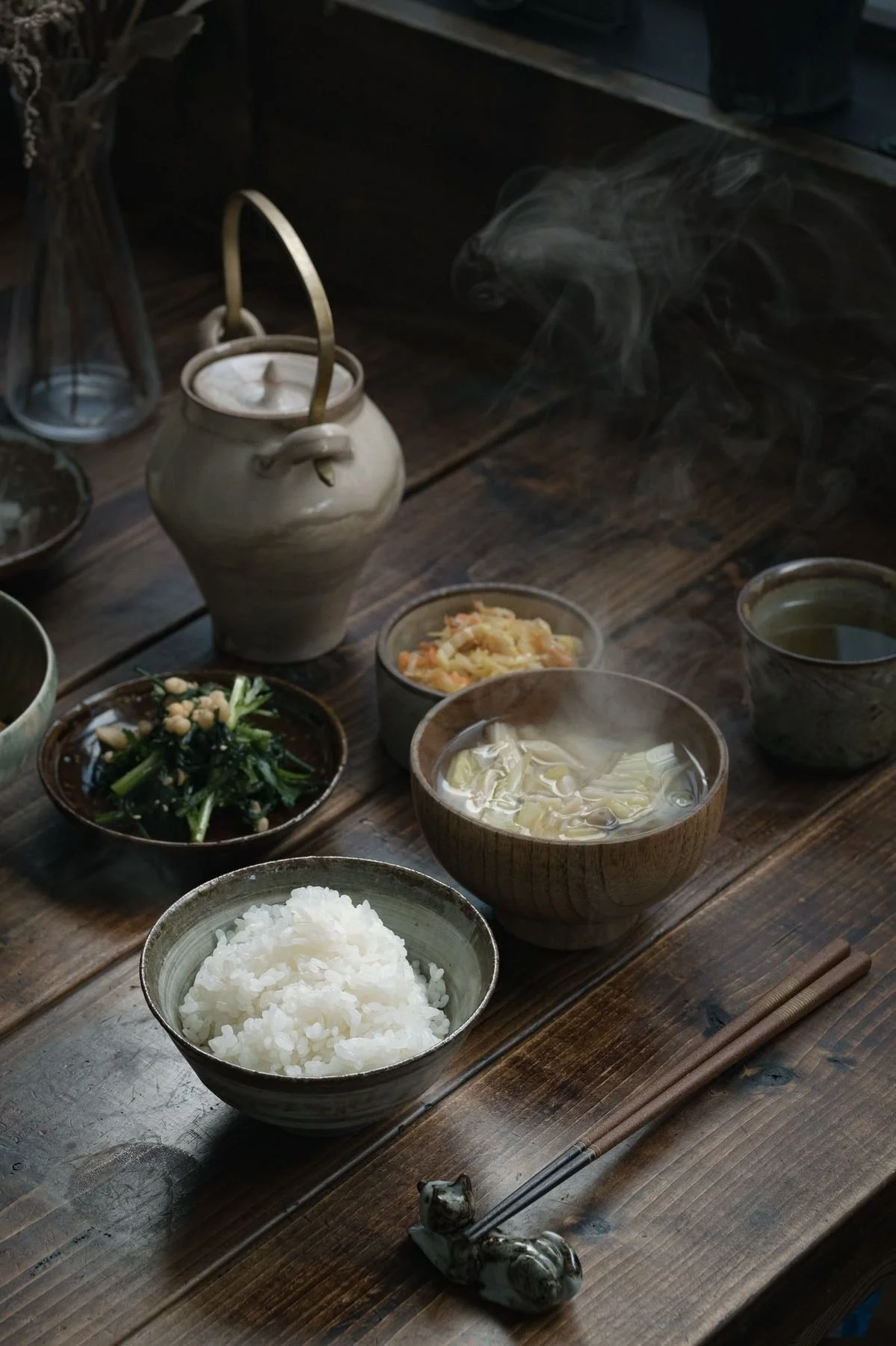
The body’s deepest transition
During pregnancy, the body expands, builds, and gives.
During birth, it opens, releases, and transforms.
Afterward, it must repair:
blood
tissues
hormones
digestion
sleep rhythms
nervous system
mineral stores
This is why so many ancient traditions revolve around the same pillars:
warmth, minerals, digestion, rest, simplicity.
These are not trends.
These are biological truths.
Warmth: the first medicine
Warmth calms the nervous system.
It signals safety.
It softens everything the body is trying to rebuild.
In Chinese postpartum tradition, warmth is essential for:
blood flow
hormonal rebalance
digestion
immunity
emotional steadiness
Modern research echoes this: warm food activates the vagus nerve, guiding the body into rest and repair — the state postpartum depends on.
Warmth is not a comfort.
It is a requirement.
Minerals: what the body spends the most
Pregnancy and birth draw deeply on mineral reserves:
magnesium
calcium
potassium
sodium
phosphorus
These minerals support tissue repair, milk production, sleep, hydration, mood, and energy.
But postpartum depletion is extremely common.
Broth is one of the easiest ways to restore them because minerals dissolve into the cooking water in a form the body absorbs instantly.
Digestion: rebuild the fire
After birth, digestion slows.
The body is busy healing.
Every ancient postpartum system agrees:
Give the body food it doesn’t have to fight.
This is why the first foods for new mothers across cultures are:
broth
soups
porridges
stews
teas
cooked fruits
warm grains
Warm, soft, mineral-rich.
No raw, no cold, no hard-to-digest foods.
The body needs nourishment without demand.
Collagen & gelatin: rebuilding from the inside
Slow-simmered broths produce natural collagen and gelatin — the building blocks for:
tissue repair
skin healing
pelvic floor recovery
gut lining strength
joint and ligament repair
immune balance
The “jellyness” in a cooled broth is not a preference — it’s support.
This is why broth is central in Asian and South American postpartum kitchens.
It rebuilds what was given.
A ritual of restoration
Beyond nutrients, broth is a ritual — a moment of warmth, breath, and presence.
It reminds the body that nourishment doesn’t have to be complicated.
It just has to be real.
Support made simple for partners
Postpartum asks a lot from partners too.
There is love, responsibility, sleeplessness, and the desire to help — but often little guidance on how to nourish the mother in a meaningful way.
Warm, ready-to-eat broth makes support simple.
A partner doesn’t need to cook elaborate meals or learn recipes in the middle of the night.
All they need to do is warm a jar, pour it into a bowl, and offer it with presence.
A small act with tremendous impact.
It becomes a ritual:
a moment of care, grounding, and real nourishment for the mother — without adding pressure or mental load to anyone.
Broth gives partners a role.
It helps the whole family.
Why we offer broth bundles
Our own postpartum experience showed us how essential warmth and minerals truly are — not just for the mother, but for the whole household.
Broth became our daily ritual, our restoration, our calm.
This is why Phood Kitchen offers broth bundles and inspiration for life’s tender transitions — so every body has access to simple nourishment, especially when life asks for softness and rebuilding.
From our kitchen to yours.